

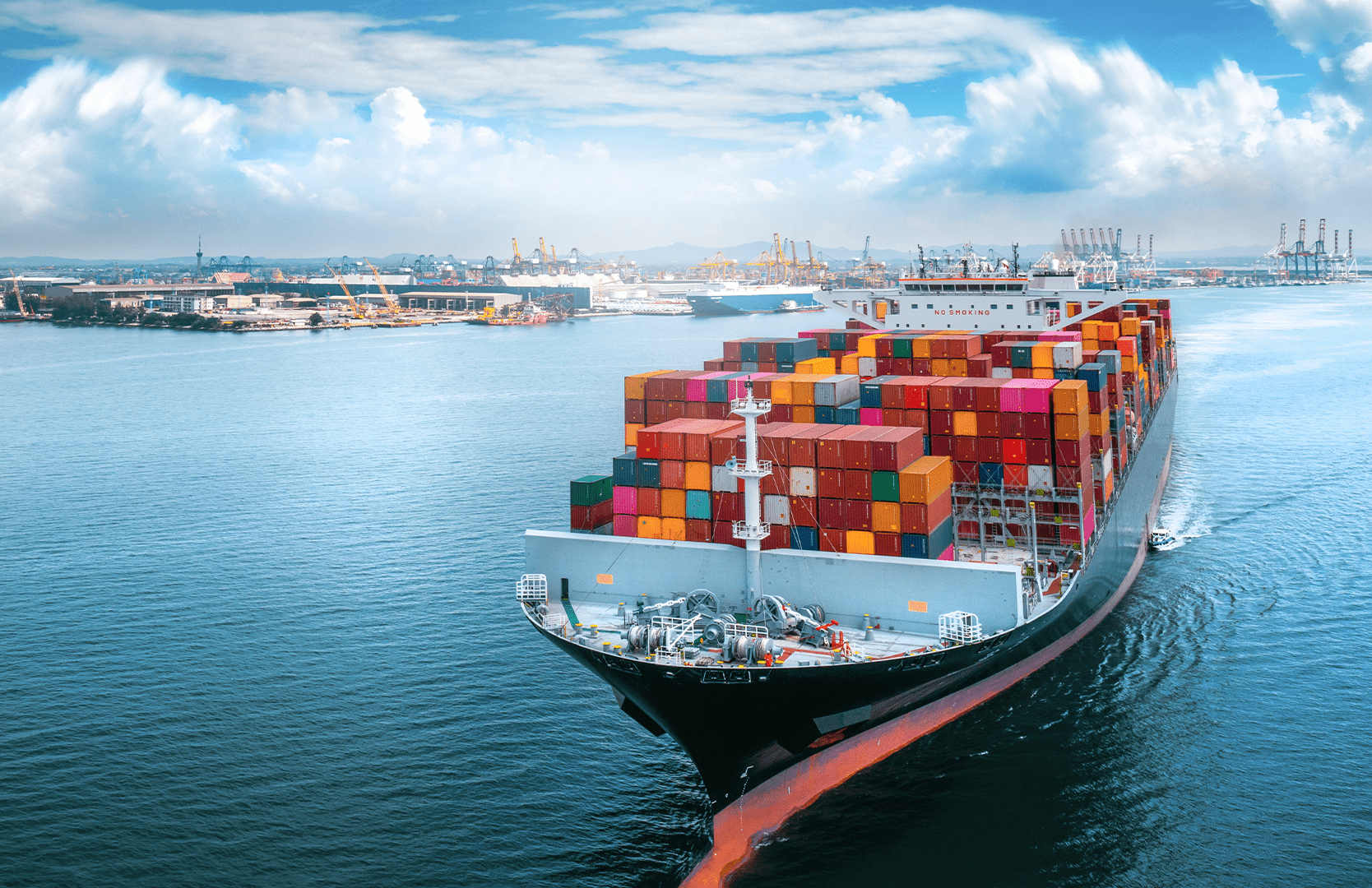
Importing is nothing more than the process of buying goods from other sources. However, in order to carry out this operation, it is necessary to have knowledge of the market, the product’s technical information, the import process as a whole and, above all, the tax scope. Importing is a capital investment, and without the necessary knowledge, the risk of losing assets becomes greater.
That’s why, in today’s article, we’ll explain a little more about import tax planning. Check it out:
What is import tax planning?
Import tax planning is the budgeting of operations in order to maximize profits and boost the competitiveness of the business enterprise. It is important to stress that there are no loopholes in the law where we can “pay less tax”, so tax planning is actually a preventative and investigative action, where the company prepares for the investments to be made, and seeks – without going beyond the limits of the law – a less costly way of carrying out the process.
What points need to be taken into account when carrying out tax planning for imports?
#1 Study of taxation
A tax is nothing more than a compulsory contribution laid down in legislation for a specific purpose. Duties can be divided into taxes, fees, social contributions and improvement contributions. On import, they are calculated on the customs value (CV), which is the sum of the value of the goods, freight, TCH and insurance. They are always expressed in Reais according to the exchange rate of the day.
The following taxes apply to imports:
- Import Tax (II)
It is the main and most important of the import taxes, as it is extra-fiscal in nature, i.e. it is not just for collection, but to control the volume of imports. The Federal Constitution allows the Executive Branch to change its rates at any time, although the standard rates are established by the Common External Tariff – TEC. The calculation basis is the customs value. Payment is made by debit to an account when the DI is registered.
- Industrialized Product Tax (IPI)
It is levied on industrialized products and payment is made by debit to an account when the DI is registered. The rates are set out in the
Tax on Industrialized Products (TIPI) is levied and its calculation basis is the sum of VA + II.
- SISCOMEX User Fee.
Fee charged for using Siscomex, as provided for in Law No. 9.716 of 1998. The fee is R$ 185.00 per DI or DUIMP and R$ 29.50 for each addition of goods, subject to the limits set by the RFB.
- PIS/PASEP
Contribution to the Social Integration and Public Servant Equity Formation Programs. Its calculation basis is the VA. The rate is 2.10%, depending on the imported product.
- COFINS
Social Contribution for the Financing of Social Security. Its calculation basis is the VA. The rate is 9.65% or 10.65%, depending on the imported product.
- Additional Freight for the Renewal of the Merchant Marine (AFRMM).
This is a fee charged for unloading a vessel in a Brazilian port. Its rates vary as shown below:
I – 25% (twenty-five percent) in long-distance navigation; II – 10% (ten percent) in cabotage navigation; and
III – 40% (forty percent) in river and lake navigation, when transporting liquid bulk in the North and Northeast regions.
- ICMS
Tax on operations relating to the movement of goods and on the provision of interstate and intercity transportation and communication services. This is a state tax levied by means of a collection form, and its rates vary according to the legislation of each state. Below, you can see its calculation basis:
ICMS = (V.A. + II + IPI + TUS + PIS + COFINS + Expenses incurred in Customs Clearance) / 1 – ICMS rate.
#2 Drawback
Drawback is actually an incentive to export, as it is an exemption from the tax burden on the import of inputs that will be used in the production of goods that will later be exported. Of course, there is stricter control over this operation by government agencies. However, drawback offers immediate benefits, as it grants exemption or suspension of Import Tax, IPI, ICMS, Additional Freight for the Renewal of the Merchant Navy (AFRMM), as well as exemption from paying extra taxes.
#3 Special customs procedures
Three factors can help reduce import costs: the purpose of the operation, the region where the company is located, and the size of the company, as there are several special customs regimes that institute differentiated tax burdens and rules parallel to the common taxation system. The Drawback mentioned above is one of them, but there are many others, as listed below:
- Temporary admission;
- Simplified Taxation Regime;
- Special Taxation Regime;
- Unified Taxation System;
- Customs bonded warehouse;
- Export Processing Zones;
- Manaus Free Trade Zone;
- Among others.
#4 International trade agreements
Nations seek to unite in order to meet domestic demands and shortcomings (imports) and to sell products with greater production capacity and domestic volume (exports). Closer ties between countries are intended to promote free trade and reduce the bureaucracy imposed by each country. A major agreement to which Brazil belongs is Mercosur, which provides for the free movement of goods, services, productive factors and people within its member states, which are Argentina, Brazil, Uruguay and Paraguay.
Mercosur envisages the establishment of a common market, with common import and export tariffs; the bloc does not yet have all the homogeneity of a common market, and is still in the development phase.
#5 Operationalization of the process through Tranding Companies
In the state of Santa Catarina, many commercial import companies, the so-called Trading Companies, have the TTD 409 – Differentiated Tax Treatment, this special regime is offered to companies established in the state and can be used in the three import modalities – direct, on account and order or order – through a Trading Company. The benefit provides for a reduction in the ICMS rate, and the value of the rate is assessed according to each company. Another important detail is that under this regime, ICMS is only paid on the product’s outgoing invoice. It is worth noting that there is no general rule where all Trading Companies have the TTD.
If you’re looking for a company to help you with this process in an effective way, enlist the help of SUPERIA’s experts and contact us by clicking here.